LaLa Hsu’s seventh album, 聲音的隱喻, arrives December 4
Taiwanese singer-songwriter LaLa Hsu’s seventh album, 聲音的隱喻, hits streaming December 4 via AsiaMuse. So far only the title track and 燕子 are confirmed. A short listening path through her earlier work is below.
 Mina Park


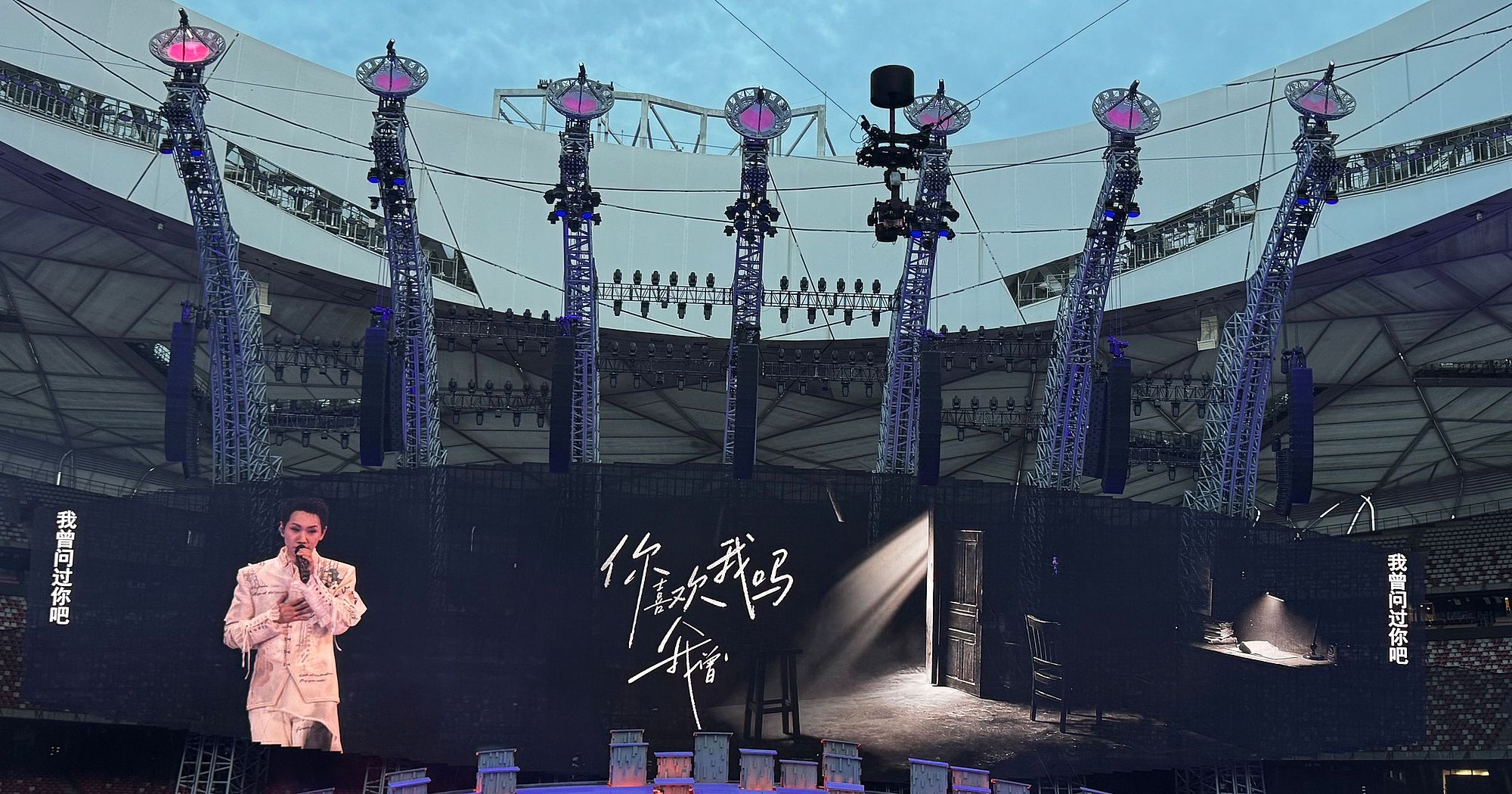
On November 19, LaLa Hsu opened an Instagram livestream with almost no warning, sat under her old “佳瑩之音” banner, and played two unreleased songs on guitar. The first was 聲音的隱喻. The second was 燕子. Near the end she said her seventh studio album, also called 聲音的隱喻, would land digitally on December 4 through AsiaMuse. No full tracklist has gone out. A physical date is still open. For North American listeners who mainly know Mandopop through idol groups, it is a good week to learn who she is.
Hsu, born Hsu Chia-ying in Hualien and raised in Taichung, came up the long way. She trained as a nurse, worked at Taichung Veterans General Hospital, then quit and entered the third season of CTV’s One Million Star (超級星光大道) in 2008 without telling her family. Mid-season she scored a perfect 25 with 身騎白馬, a ballad that folds a Taiwanese opera refrain into Mandarin pop. On August 15 she won the finale with two of her own songs, 失落沙洲 and 香水. AsiaMuse released her self-titled debut the next May. In 2010 she won Best New Artist at the Golden Melody Awards, the first One Million Star graduate to take that prize.
The writing is what kept her there. Early Hsu songs linger on leave-takings: a sandbar after a breakup, a white horse riding toward someone who may not wait. She kept writing for herself and for other singers, then opened the circle. 尋人啟事 (2014) brought in outside composers and a low, searching title ballad. 心裡學 (2017) turned inward and won her Best Mandarin Album and Best Female Mandarin Singer at the 29th Golden Melody Awards. 給 (2022), made after marriage and a first child, loosened into dance, city pop, and R&B with producer Howe Chen. She later won Best Single Producer for 以上皆非 and Best Composer for 不在一起就不會分開, a song she wrote for Hong Pei-yu. That is five Golden Melody awards in five categories. The voice still does most of the work: clear, unhurried, and close to the lyric.
She also sits inside a longer Taiwanese line. Campus folk in the 1970s told young writers to “sing our own songs.” Later artists like Cheer Chen, Deserts Chang, and Crowd Lu carried that guitar-forward Mandarin habit into the streaming era. The records travel farther than Taiwan’s market size would predict, through mainland platforms, Southeast Asian Chinese communities, and diaspora playlists. Hsu’s 2016 stretch on Hunan TV’s I Am a Singer 4 made the reach concrete. She opened with 失落沙洲, finished as the season’s favorite on Xiami even without the crown, and left mainland listeners with a songwriter many of them met for the first time.
If you are new, keep the queue short. Start with 身騎白馬 for the opera-into-pop breakout, then 失落沙洲 for the goodbye song that followed her onto mainland television. Add 尋人啟事 for the quieter mid-career center, 言不由衷 from 心裡學 for the blessing she sings after a relationship is already gone, and 準明星 or 以上皆非 from 給 for the brighter, producer-forward stretch that came later. On December 4, put 聲音的隱喻 and 燕子 next to those. The rest of the album is still unheard. In the livestream, Hsu called the title track a place to escape into when the words will not come out: headphones, a song, a line of lyric.