Rex: A Dinosaur’s Story opens at Metrograph in its first U.S. theatrical run
Haruki Kadokawa’s 1993 family film Rex: A Dinosaur’s Story opens at Metrograph on December 11 in a new remaster, its first U.S. theatrical run. Japan saw it the same summer as Jurassic Park. A scandal cut the original release short.
 The Goldscene Desk

Haruki Kadokawa’s Rex: A Dinosaur’s Story (REX 恐竜物語) opens at New York’s Metrograph on December 11, the start of its first U.S. theatrical run. Kani Releasing is circulating a Kadokawa Pictures remaster that already played Japan Society’s Japan Cuts festival on July 10. The booking sits inside Metrograph’s Dinosauria series, which runs through early January and pairs Rex with Jurassic Park, The Land Before Time, Godzilla, and related company. Early showtimes include Friday, December 11 at 5:15 p.m., Saturday, December 12 at 1:35 p.m., Christmas Day at 12:30 p.m., and “Easy Reader” matinees on December 13 and 24. After New York, Kani’s list stretches to Chicago, Seattle, Austin, Montreal, Honolulu, and more into 2027.
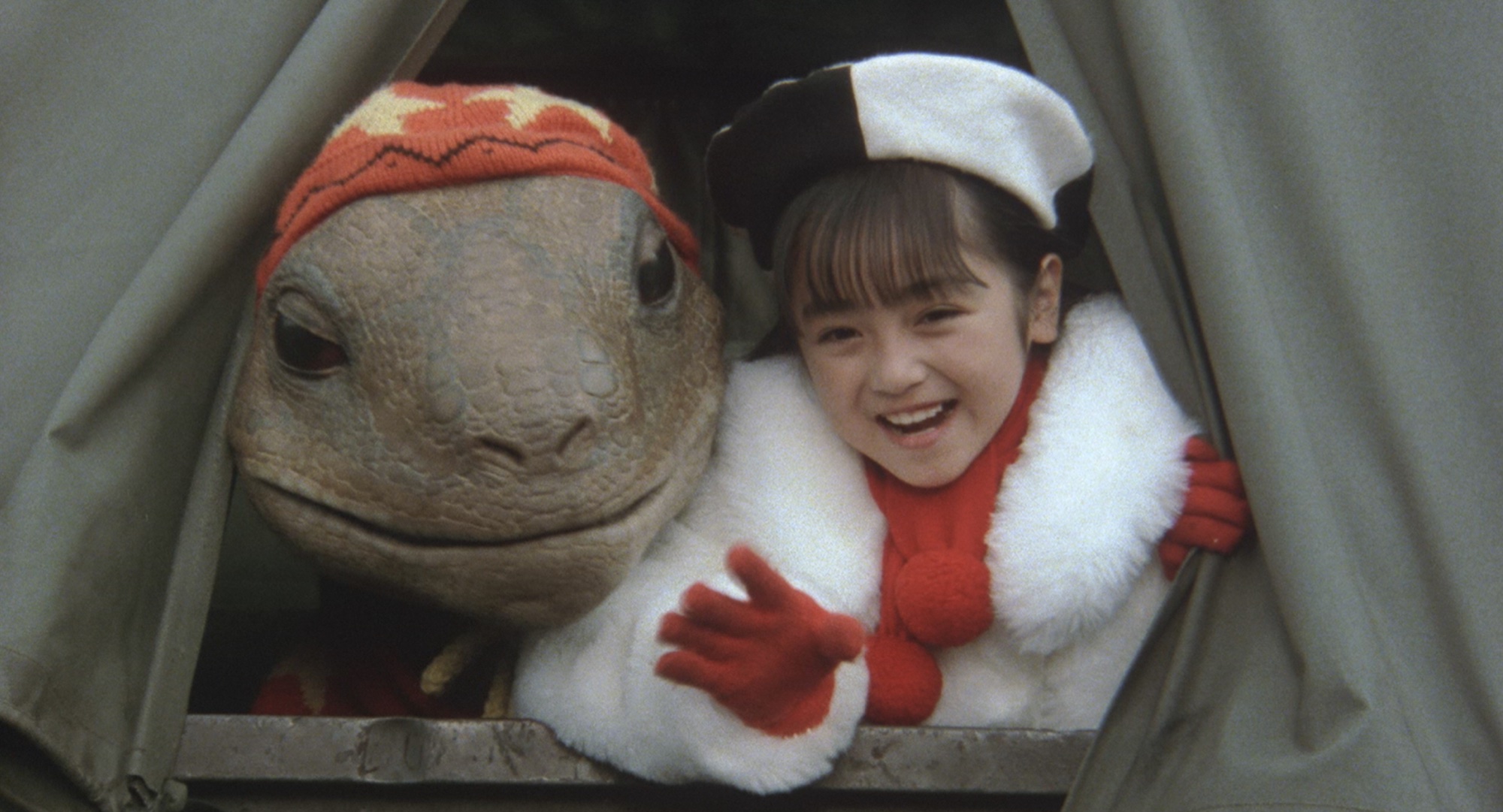
Japan met the film on July 3, 1993, two weeks before Jurassic Park opened there. Kadokawa, the publishing heir who spent the late 1970s and 1980s rebuilding Japanese commercial film through “media mix” campaigns that sold novels, movies, and merch together, directed it himself after a Hollywood detour stalled. He aimed the picture at Shochiku’s family audience. The story, from Masanori Hata with a CLAMP manga in the mix, follows Chie, played by Yumi Adachi in her film debut. Her paleontologist father (Tsunehiko Watase) finds a dinosaur egg in a Hokkaido cave. Chie’s estranged mother, an embryologist played by Shinobu Otake, helps hatch it. The baby Tyrannosaurus, named Rex, becomes Chie’s charge, then a national TV mascot, then a product the adults try to seize. The film keeps circling the same ache: a mother who left, and a daughter who becomes a parent to a dinosaur.
That bond is where the movie lives. Rex learns words, eats, even uses a toilet. Commercials and merchandise wear him down until Chie and her parents break the contracts. On Christmas Eve, officials demand the animal for a museum showcase. Chie and Rex run, chased through holiday crowds, onto snowmobiles, into a hot air balloon. The creature effects come from Carlo Rambaldi, the Italian designer behind E.T. and the Alien head, so the hatchling has soft eyes and practical weight. Suit-mation and in-camera height gags keep one foot in tokusatsu. The film’s own marketing mirrored the plot: toys, a theme song by Kome Kome Club (Toki no Tabiji), the CLAMP book, and brand partners including KFC, already tied to Japanese Christmas dinners since the 1970s. On screen and off, Rex was asked to sell things.
Commercially, the picture almost worked and then stopped cold. The Japan production budget sat around ¥2 billion. Distribution income reached ¥2.2 billion, enough to finish as the second-highest-grossing Japanese film of 1993 behind Godzilla vs. Mothra, and Shochiku’s biggest release until The Fellowship of the Ring. Adachi won Newcomer of the Year at the Japan Academy Film Prize. In August 1993, though, Kadokawa was arrested over cocaine-smuggling charges involving an aide. He denied the accusations, was later convicted, and served about two and a half years. Shochiku pulled Rex early, citing concern about children watching a director under that cloud. The run that might have stretched longer ended after about ten weeks. For American audiences, the film barely existed after that. It stayed a Japanese memory and a cult tape until the remaster.
American repertory theaters and small distributors have spent the past few years widening Japanese cinema past Studio Ghibli, festival anime, and the Godzilla shelf. Metrograph has run Shinji Sômai restorations. Japan Society keeps feeding New York classics and new work through Japan Cuts. Kani Releasing, founded in 2021 by Pearl Chan and Ariel Esteban Cayer, built a catalog that mixes contemporary Asian titles with repertory films that never got a proper North American theatrical life. Cayer has described the job as bringing films that feel local where they were made, then giving them enough context to travel. Rex fits: a huge domestic commercial object that never entered the U.S. canon because scandal, timing, and rights left it stranded.
Restorations finally make that middle tier available, and holiday calendars need titles beyond another Home Alone print. Audiences who already buy tickets for Ozu, Hamaguchi, and 4K kaiju are curious about the commercial movies Japanese studios lived on in the early 1990s. Rex is sentimental and sincerely weird. It asks you to care about a girl who mothers a dinosaur while the adults try to brand him. At Metrograph it will play across from Spielberg’s 1993 film, useful company for a child who refuses to hand her friend to the museum.