Helen of Troy wears a Karachi sculptor’s broken-statue bronze for The Odyssey
Costume designer Ellen Mirojnick called Misha Japanwala’s bronze collar for Lupita Nyong’o’s Helen of Troy a “broken statue.” The Karachi-raised sculptor got the job the old-fashioned Hollywood way: a friend who already trusted her work brought her in.
 Anika Rao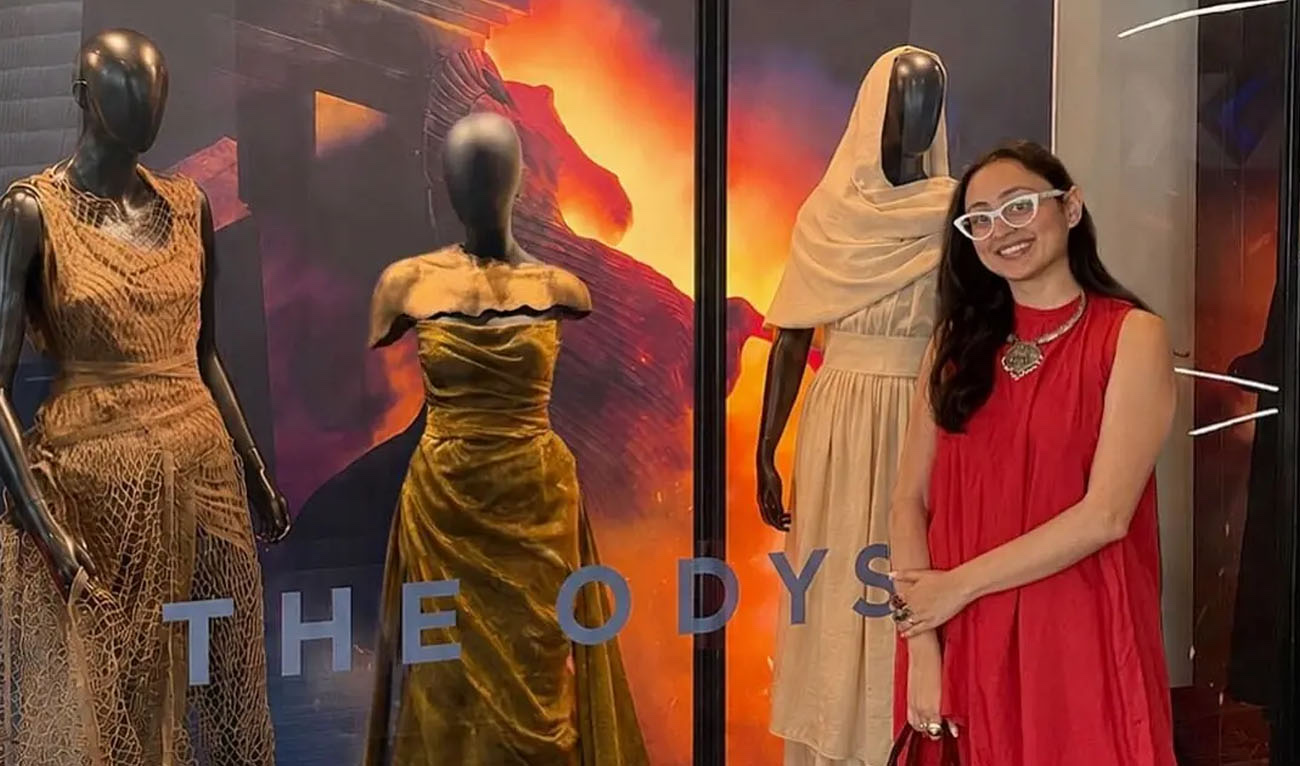
Helen of Troy usually arrives in movies as polish: gold that photographs like jewelry, beauty that never took a hit. In Christopher Nolan’s The Odyssey, costume designer Ellen Mirojnick wanted something closer to real bronze: dark, heavy, oxidized, dented, “alive with its own history.” For Lupita Nyong’o’s Helen, that brief landed on Karachi-raised sculptor Misha Japanwala, whose asymmetrical bronze neck-and-shoulder plate Mirojnick later described as looking “like a broken statue.”
That is the Brand Watch story. Not that a Pakistani artist got a credit on a Universal epic. That the face that launched a thousand ships is being dressed like a damaged object that still takes up space.
How a friend opens the costume department
Nyong’o plays Helen and her sister Clytemnestra in the film, which opened theatrically on July 17 after a London premiere. She did not wait for a diversity shortlist to find Japanwala. She recommended her friend to Mirojnick, the Oscar-nominated Oppenheimer costume designer, after already wearing Japanwala’s custom body-cast breastplate to the 2023 Tony Awards. Nyong’o called that earlier look a “shameless out-of-body experience.” On The Odyssey, she put the same trust inside Nolan’s Sparta.
Japanwala made two pieces for Helen: the broken-statue collar, worn as a capelet over a ruched gown in a Sparta banquet scene with Jon Bernthal’s Menelaus and Tom Holland’s Telemachus, and a bronze choker for a farewell look with a Spanish chainmail-like caftan that weighed about thirty pounds. Mirojnick hesitated to ask. Nyong’o’s answer, per W Magazine: she had worn more pounds of Chanel pearls.
Japanwala thanked Nyong’o publicly for championing the work and called the collaboration “a tiny part of this monumental film.” The banquet collar is partly hidden by the table in the finished cut. The choker look is the clearer bookend on screen. The craft still changed how Helen reads before either frame lands.
Why broken bronze fits her practice
Japanwala’s studio language is not myth fan service. Raised in Karachi, Parsons-trained, now based between Karachi and New Jersey, she builds sculptural body casts rooted in beghairati, radical shamelessness that reclaims bodies from control and silence. Her 2023 New York solo show Beghairati Ki Nishaani: Traces of Shamelessness documented Karachi’s femme, queer, and trans communities through moldings meant to stand as armor and archive. Cardi B, Lil Nas X, and Joy Crookes have worn her work. Forbes 30 Under 30 and Dazed 100 noticed. The Odyssey pieces are continuous with that practice: metal that keeps the body’s history visible instead of sanding it into perfection.
Mirojnick’s production-note line about movie bronze usually looking “gold and gleaming” is the foil. Japanwala’s Helen is not a trophy finish. She is a statue that has already been broken and still has to host dinner.
Our take
Hollywood still treats South Asian craft as a surprise guest when it shows up inside a Nolan frame. The more useful read is narrower. Nyong’o already knew Japanwala’s hands. Mirojnick needed realism that could survive IMAX. A Karachi–New Jersey sculptor answered with oxidized bronze. That is soft power as a friendship pipeline into a costume department, not a campaign contract. Watch for the collar and the choker the next time Helen is on screen. The myth is louder when it looks like it has been worn.