Aarthi Sampath turned a rejected restaurant idea into Drāvida
Chef Aarthi Sampath worked from Taj hotel kitchens to Junoon, Food Network, and CookUnity before self-funding Drāvida, her East Village restaurant built around South Asian food traditions carried across countries and generations.
 Anika Rao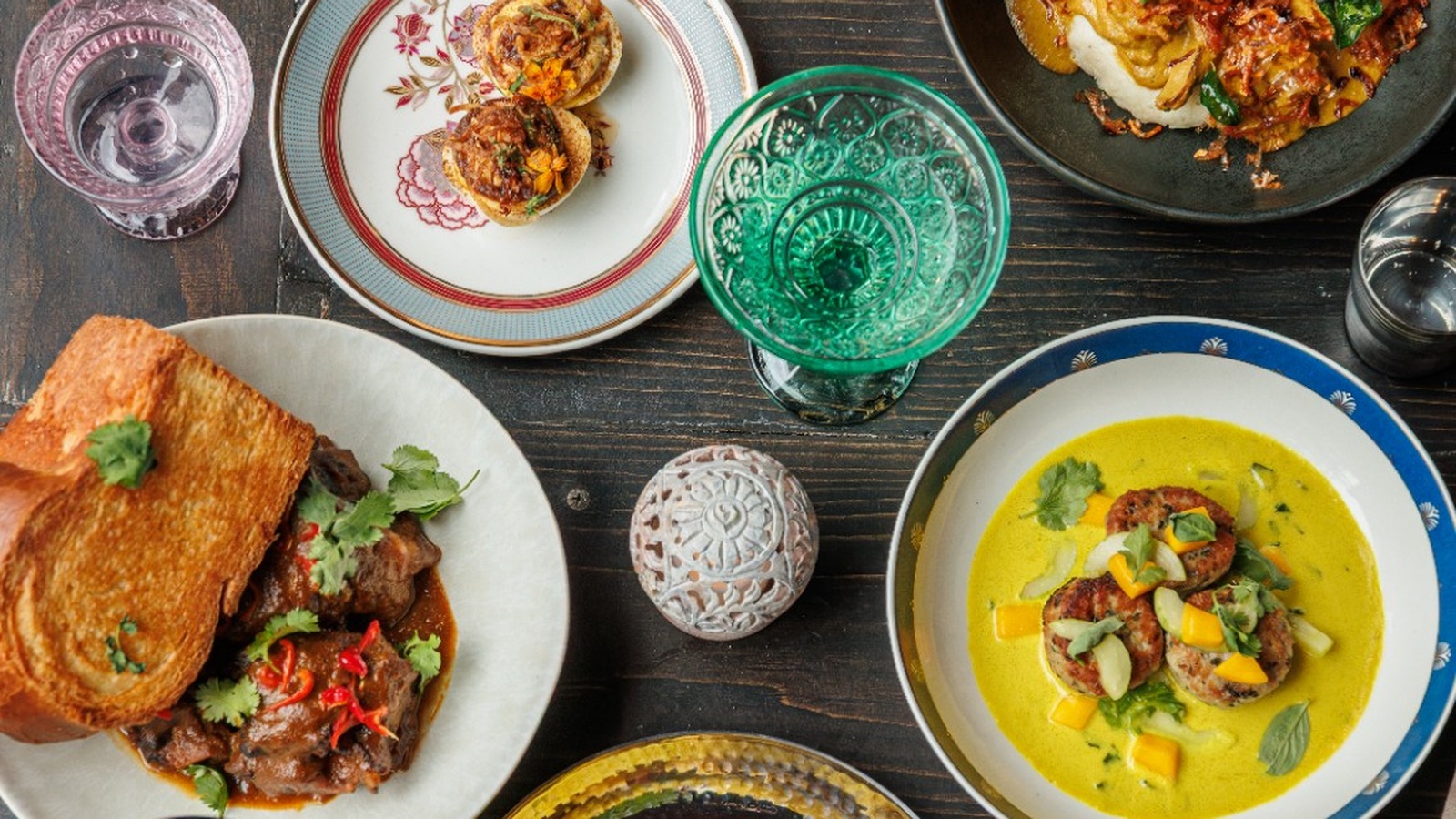
Aarthi Sampath spent years building the résumé that usually precedes a restaurant: five years with Taj Hotels in India, a climb from intern to chef de cuisine at Michelin-starred Junoon, a Chopped title, a chicken-biryani victory over Bobby Flay, and enough meal-delivery volume to make her cooking familiar in homes across the United States.
When she first pitched her own restaurant in 2019, investors still told her the idea was too difficult to explain.
Seven years later, Drāvida is open in Manhattan's East Village. The restaurant connects food traditions from India, Pakistan, Sri Lanka, Nepal, Guyana, Trinidad, Malaysia, South Africa, and other places where South Asian communities built new homes. Sampath ultimately financed the project herself, turning an idea other people considered too broad into the clearest expression of her career.
That long route matters more than the familiar television-chef shorthand. Drāvida is Sampath's first permanent restaurant, but it arrives after years of learning how food changes when it moves between hotel dining rooms, competition kitchens, delivery boxes, food trucks, and family tables.
Mumbai gave her a wider idea of Indian food
Sampath was born in Chennai and raised in Chembur, Mumbai, in a Tamil family. At home, South Indian cooking provided the foundation. At school, exchanging lunch boxes exposed her to the many regional foods living within the same city.
Her interest in cooking began early. She has recalled finding her mother's old cookbooks and watching a chocolate cake rise when she was 13. The transformation felt like magic. She later studied hotel management at the Institute of Hotel Management Jaipur, where she spent extra time reading about classical French technique.
Taj Hotels became her first professional education. Sampath worked across properties in Mumbai, Delhi, Hyderabad, and Chennai for about five years. The scale gave her strong systems and access to ingredients, but she eventually felt that her growth had stalled. She wanted to understand why European and American kitchens still set so many of the industry's benchmarks.
In 2013, she moved to the United States to study food-service management and baking and pastry at Johnson & Wales University in Rhode Island. Starting again meant accepting a lower rung than the one she had earned in India.
New York taught her to work without a safety net
Sampath joined Junoon as an intern and rose to chef de cuisine in roughly three and a half years. Working with Vikas Khanna, she helped prepare a high-profile dinner for Indian Prime Minister Narendra Modi at the Waldorf Astoria. More importantly for her own development, she learned how to present Indian food in a New York fine-dining room without losing the logic of its spices.
Her path after Junoon was unusually varied. She became executive chef at American Gymkhana in Orlando, returned to New York to work at The Breslin under April Bloomfield, and moved to Seattle to help run Kukree, a food truck conceived as a test kitchen for a future restaurant. Later roles included the Rainbow Room at Rockefeller Center and head chef at Chinese Tuxedo.
Each move added a different constraint. Fine dining demanded consistency and polish. A food truck made cost, speed, and local produce impossible to ignore. Large New York rooms required leadership across teams. Sampath has said the American kitchen also forced her to become more careful about labor and food costs than she had needed to be at Taj.
That operating experience helps explain why Drāvida survived years as an unbuilt concept. Sampath was developing more than recipes. She was learning what kind of business could support them.
Television supplied recognition, then she built scale elsewhere
Sampath became the first Indian woman reported to win Food Network's Chopped in 2016. Two years later, she appeared on Beat Bobby Flay and defeated him with chicken biryani, a dish she chose partly because its complexity was still underestimated by many American viewers.
The wins gave her public recognition, but they did not hand her a restaurant. She continued consulting, cooking, and appearing on television, including serving as a judge on the first season of MasterChef Tamil in 2021. Taking that job required her to return to India quickly and sharpen Tamil she had mostly used with her mother while living abroad.
Her more consequential business step came through CookUnity. Sampath developed prepared meals for the chef-led delivery platform and built a large direct-to-consumer audience. When outside investors remained unconvinced by Drāvida, revenue from that work helped her fund the restaurant herself.
The sequence is useful for understanding modern chef ownership. Television created familiarity. Delivery converted familiarity into repeat purchasing. That recurring business gave Sampath leverage to open a dining room without reshaping the entire concept for an investor.
Drāvida follows recipes farther than national borders
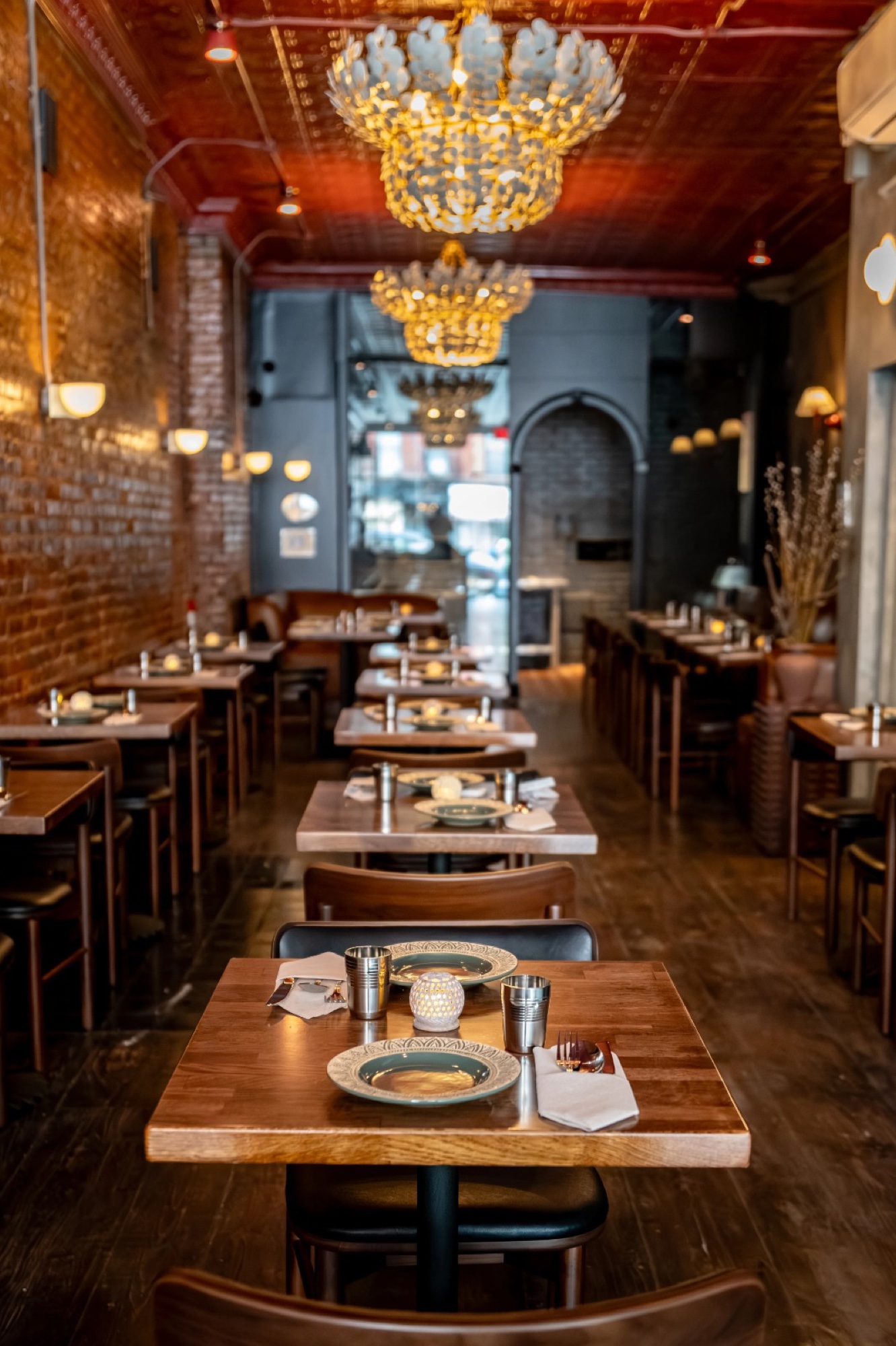
Drāvida opened on May 21 in a restored, century-old building at 211 First Avenue. Original brick ovens helped persuade Sampath that the space was right. The main restaurant occupies the upper floor, while the downstairs Jam & Jaggery lounge gives the project a quieter place for cocktails, tea, small plates, and private events.
The menu's range is deliberate. Earlier dishes included duck nihari hand pies, Lhasa lamb momos, Trinidadian doubles, South African oxtail bunny chow, and an Indo-Malay nasi kandar feast. The current menu continues that movement with Myanmar-style deviled egg bejo, Uyghur sirloin kawap, and asparagus poriyal from Tamil Nadu.
Those labels help diners see connection without pretending the foods are interchangeable. South Asian recipes changed as people encountered Caribbean peppers, Southeast Asian ingredients, colonial trade routes, and new neighbors. Sampath uses familiar foundations such as spice, shallots, sourness, and heat to make those histories legible on one menu.
There is a real creative risk in covering so much territory. A restaurant can flatten distinct communities when it treats geography as a collection of inspirations. Drāvida's best defense is specificity: name the origin, explain the route, and make the individual dish satisfying before asking it to carry a larger story.
Our read
Sampath's strongest credential is no longer a television trophy. It is the patience to keep refining a restaurant after experienced operators told her diners would not understand it.
Drāvida now has to prove that curiosity turns into regular customers after the excitement of an opening season. The menu also needs to keep earning trust from people who recognize these dishes as family food rather than novel New York discoveries.
Sampath enters that test with an unusually complete education. She understands prestige kitchens, mass delivery, television, and the economics of feeding people quickly. After spending years adapting to other people's formats, she finally has a room where every part of the experience can answer to her own idea.