Why Southeast Asian film hasn't had its K-drama moment yet
Thai, Indonesian, and Vietnamese films are smashing local box offices, and Netflix is greenlighting Southeast Asia faster than ever. The K-drama moment still has not arrived because the region is many languages, theatrical-first, and horror-shaped, not one serialized export machine.
 Mina Park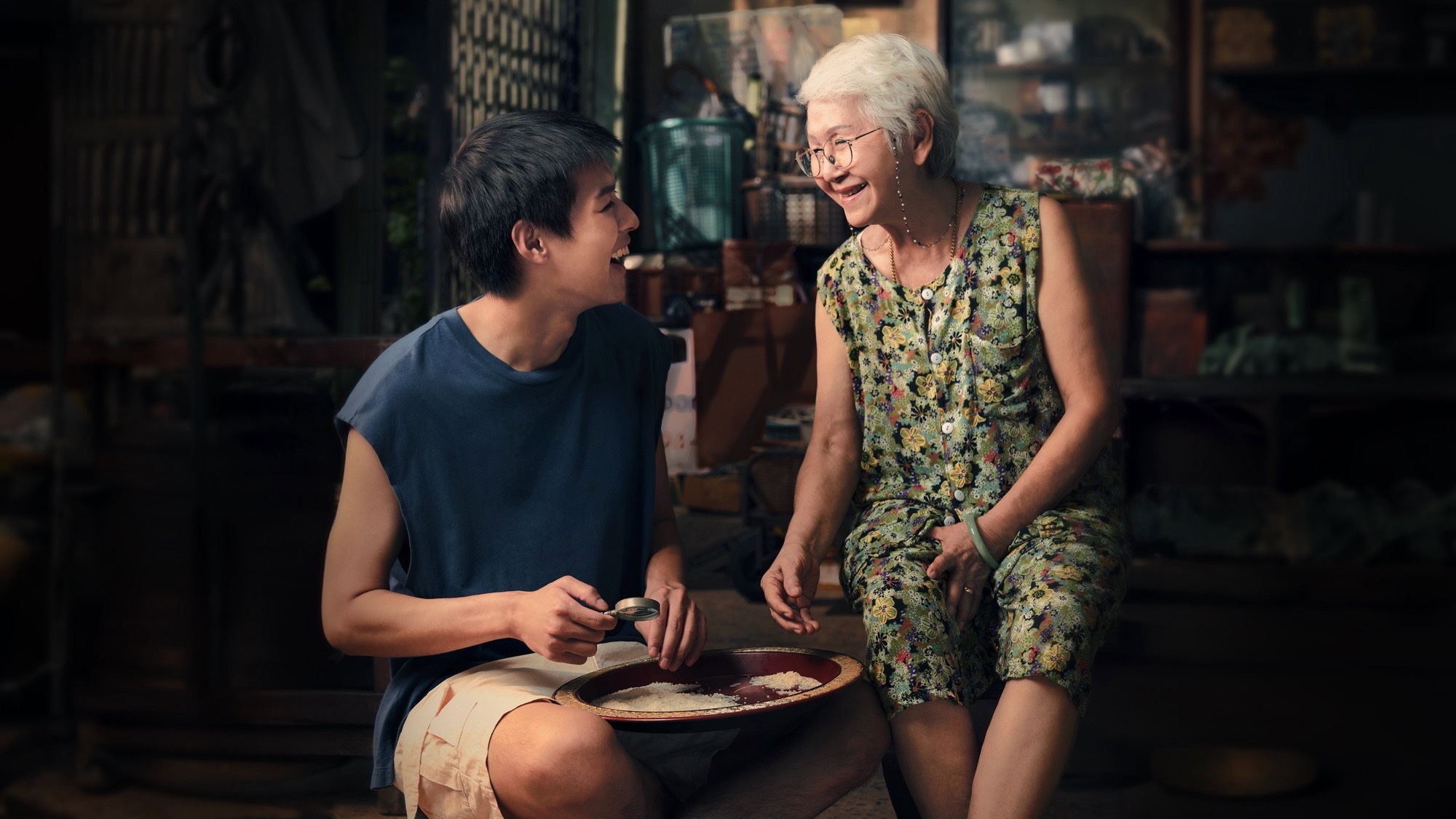
How to Make Millions Before Grandma Dies filled cinemas from Bangkok to Jakarta, then barely registered in the United States.
Pat Boonnitipat’s Thai family drama, distributed at home by Bangkok studio GDH 559, took about $73.8 million worldwide off a $1 million budget. North America contributed roughly $304,000.
That is the Southeast Asian film story in one ledger. The region already makes smash hits. It has not made a K-drama moment.
Our read: people keep asking when Jakarta or Bangkok will get its Squid Game. The better question is why a boom this loud still cannot copy Korea’s serialized export machine.
Home-market heat, no single pipe
Korea had one language, one industrial policy, and a streamer willing to treat the country as a global factory. Netflix’s 2023 pledge put $2.5 billion into Korean series, films, and unscripted over four years.
Research firm Omdia later put Korean titles at 12.1 billion Netflix hours worldwide from April 2025 through March 2026, second only to U.S. content.
Southeast Asia does not have a Korea-sized on-ramp. Indonesian, Thai, Vietnamese, Tagalog, Malay, and Khmer titles do not share a default subtitle habit the way Korean drama trained the world to click “play anyway.”
Indonesia is the region’s theatrical heavyweight. A market study from Jogja-NETPAC, Indonesia’s major Asian film festival, put Indonesian films at 82 million admissions in 2024 and about 65 percent of national box office. Local animation Jumbo and Agak Laen: Menyala Pantiku, the Indonesian comedy sequel, each crossed the 10-million-ticket club.
The same study named the missing layer: Indonesia has almost no independent distributor class. Producers negotiate straight with exhibitors, then live or die on opening day. That is a system built to mint local events, not to package a title for Berlin, Busan, and a Friday Netflix drop.
Vietnam’s 2025 war epic Red Rain, directed by Đặng Thái Huyền, became the country’s highest-grossing film at about 714 billion dong, roughly $27 million. It never got a U.S. theatrical line. A national memory film can own Hanoi and leave North America untouched.
Horror moves. Family drama stays nearby.
Genre is doing the traveling that prestige drama cannot.
Indonesian folk horror already has a foreign shelf. Joko Anwar’s Satan’s Slaves became a favorite on Shudder, AMC’s horror streamer, after its 2017 theatrical run. Impetigore followed it to Sundance, then onto Shudder as an original in 2020.
Thai horror has a similar passport. Banjong Pisanthanakun’s The Medium, produced with Korean filmmaker Na Hong-jin and studio Showbox, opened in South Korea before it opened in Thailand and knocked Black Widow off the local daily chart. Fear does not need a language lesson.
Family drama needs adjacency. Grandma Dies traveled inside Asia because Teochew family math, inheritance fights, and a dying matriarch already made sense in Chinese-language markets. U.S. distributor Well Go USA gave it a modest booking, not a binge habit.
Censorship makes that split worse. Indonesia’s Film Censorship Board still certifies every public feature. Queer and political work can win festivals and lose cities. Thai filmmakers talk about “sensitivity management” more than a single banned reel. Horror folklore often clears. Contemporary civic drama often does not.
Our take: horror is the region’s English. The romance-and-workplace machine that taught the West to wait for Thursdays is still missing.
Netflix is commissioning. Viu is still a Korean pipe.
Netflix’s Southeast Asia job is local first. Research firm Ampere Analysis counted 18 SEA titles in Q1 2026, a quarterly high.
The slate follows local strengths: Thai youth romance, Indonesian folklore thrillers, Filipino star melodramas. Malobika Banerji, Netflix’s senior director for SEA content, has been blunt that a title which fails at home is not a success.
My Dearest Assassin, a Thai action-romance, topped the global non-English film chart in May and later logged about 18 million views in the first-half report. That is real travel, still far from the Korean drama Teach You a Lesson at 48 million, and nowhere near a weekly habit.
Netflix is running three Asia strategies at once. SEA is the local-first one.
Viu remains the region’s second-place streamer by sitting on Korean and Chinese series, then adding local originals. Media Partners Asia, which tracks the region’s paid streaming, found Indonesian titles reaching viewership parity with Korean content inside Indonesia in late 2025. That is a local industry growing up, not a global appointment show.
Festivals are the other waiting room. Jogja-NETPAC drew more than 30,000 people at its 20th edition and added a Netflix training partnership. That is a development room, not a global Friday.
Cannes Critics’ Week gave its 2025 Grand Prize to Thai director Ratchapoom Boonbunchachoke’s A Useful Ghost. Busan still functions as the Asian sales floor. North America’s diaspora festival circuit can launch a career without minting a franchise.
Hong Kong’s ASEAN Film Festival, which opens Thursday, is a different bet: putting those titles in front of Chinese-language buyers.
Five names close enough to matter
Joko Anwar is already the horror export. Impetigore proved Indonesian folklore can play Sundance and Shudder without being sanded into generic ghosts. The next step is a title that keeps that texture and gets a global simultaneous drop, not a specialty window.
GDH 559 is the commercial studio that almost built the drama moment. Bad Genius, the exam-heist hit, sits on the same roster as The Medium and Grandma Dies. If any Thai shop has Korean-style slate muscle, it is this one.
The missing piece is still a series the world waits for, not another theatrical that Asia loves and America shrugs at.
Timo Tjahjanto, the Indonesian action-horror director, put screen fighting on Netflix with The Night Comes for Us. Last August he directed the Bob Odenkirk sequel Nobody 2. The generation after The Raid, the 2011 Jakarta action hit, still exports punching more easily than serialized feeling.
Erik Matti, the Filipino action director, is testing the other conversion: film IP into a Netflix series. BuyBust: The Undesirables, with Anne Curtis returning as Nina Manigan, is due in 2026 as a nine-episode expansion of his 2018 film. If that lands globally, the path looks more like Korea’s than another prize at Cinemalaya, the Philippines’ flagship indie festival.
Ratchapoom is the festival wild card. A Useful Ghost turned a vacuum-cleaner haunting into a Cannes prize and a sly Bangkok political joke, then went out in Thailand through GDH. Horror-comedy that refuses both templates may travel further than a straight weepie, because nobody is asking it to be Crash Landing on You.
Our take
Southeast Asian film does not need to become Korean television.
It needs a distributor layer, a couple of bilingual stars a global feed already recognizes, and one streamer willing to release a local smash on the same Friday it drops Seoul.
Until then, watch the horror shelf and the regional family hits without calling either a miss. Madame in Saigon is a diaspora turnout test. Grandma Dies was an Asia-wide proof of feeling.
The K-drama moment, if it comes, will probably arrive as a series that learned from those films, not as another premiere that asks a multiplex in Dallas to behave like Busan.