Aina Abdul wrote Malaysia’s Eurovision Asia song in English, and she still sounds like herself
Aina Abdul played Bluest Sky at Rex KL on October 8, the English ballad she will take to Eurovision Song Contest Asia in Bangkok on November 14. The track lands on streaming October 9.
 Mina Park
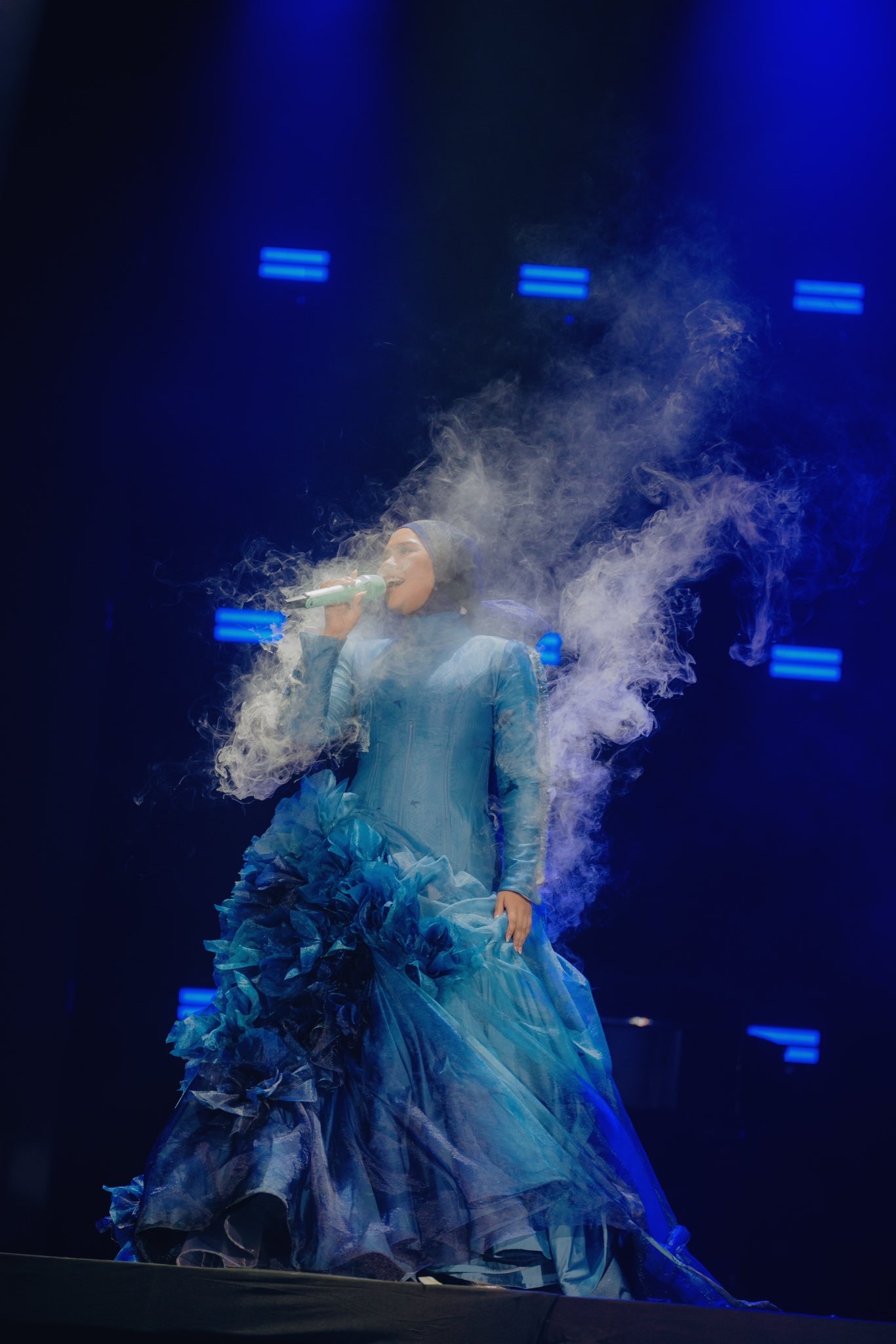

Aina Abdul played Bluest Sky on October 8 at an exclusive listening session at Rex KL, on Petaling Street. Press and a few of her closest fans heard the ballad before it hits streaming on October 9. She is taking it to Bangkok on November 14, as Malaysia’s singer at the first Eurovision Song Contest Asia.
She wrote it. Arranger Mac Chew stacked the instruments, and she said hearing the mastered version finally sounded like the big ballad she had wanted.
She would not name the man the song is for. She called him her bluest sky, and the track a love letter. It moves through love, heartbreak, and uncertainty, with the hope that a deep sadness eventually passes.
She called the recording one of the hardest of her career, because one minute has to hold love, sorrow, confusion, and exhaustion at the same time.
She has sung in Malay for years, and she said she still loves that. She chose English because she wants the song to reach a larger room.
Musical clues from the Malay world are tucked into the arrangement. She asked people to listen for them on October 9.
The other limit is the clock. She usually lets a performance run toward four or five minutes. This one has to fit inside three.
The vocal took about ten hours, against her usual two, and she moved the session from Seremban to Kuala Lumpur when the sound was wrong. She has barely been sleeping since August 15, when she was named during Anugerah Juara Lagu, Malaysia’s flagship televised song contest. She said the nerves feel like the first time she entered that show.
That same night she won Best Performance for Kamu. At home, the voice is already familiar.
Born Nurul Aina binti Abdul Ghani in Johor Bahru in 1993, and raised in Seremban, she was runner-up on Mentor Legend in 2014 under the singer Ella. Terus Hidup then won Anugerah Juara Lagu 37 in 2023.
TV3 is following the Bangkok prep on Malaysia Memburu Impian, inside the Thursday show Melodi. The European Broadcasting Union, Voxovation, and S2O Productions are running the contest.
Bhutan’s Nyendra, with Lhayi Semo, was the first singer named, on August 11. Aina was the second. Other countries have been naming their singers since.
Our read: if you only meet her in Bangkok, you will hear an English ballad and miss the decade underneath it. Bluest Sky is the introduction. Terus Hidup is the receipt. November 14 is the test of whether the room outside Malaysia stays for the second song.