Why Filipina character actresses keep becoming the best part of the movie
Ruby Ruiz and Pokwang tied for Cinemalaya Best Actress after decades of work Manila already knew. Hollywood still treats women like Dolly de Leon, Chai Fonacier, and Jaclyn Jose as overnight finds.
 Mina Park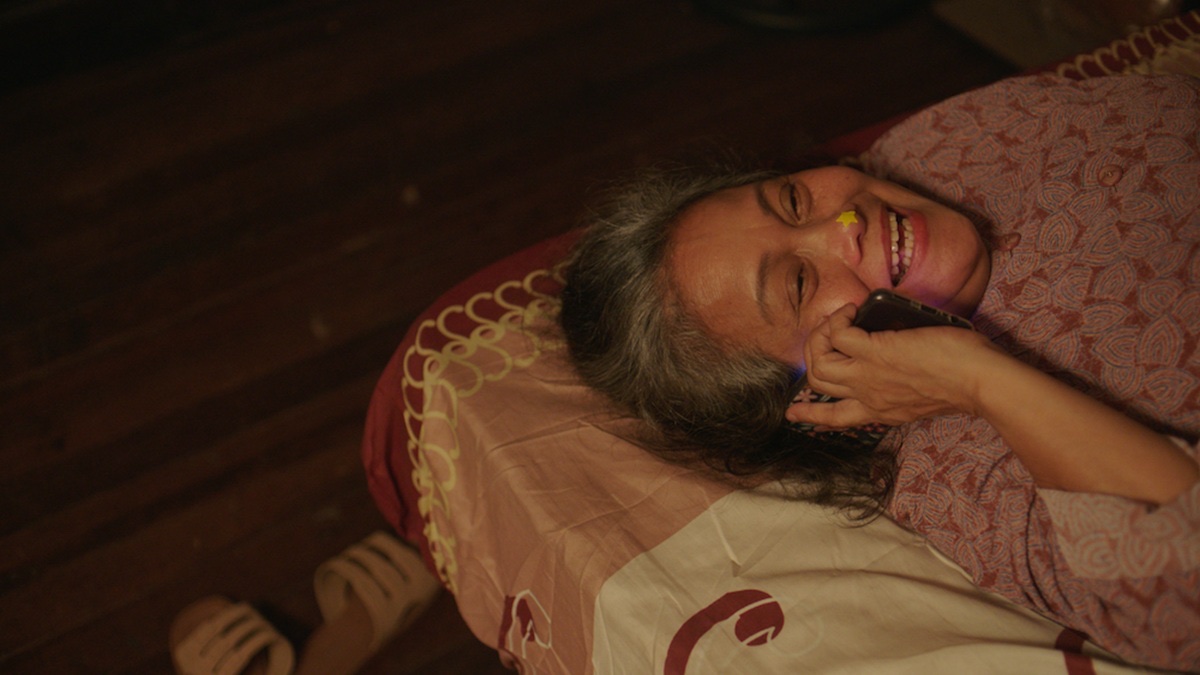
Every few years a Filipina actress "arrives" in the West. The clip goes around. Someone writes discovery. Manila, which has been watching her work for twenty or thirty years, does a slow blink.
Ruby Ruiz and Pokwang tied for Best Actress at Cinemalaya on Monday. That is the latest version of the same story. One woman came up in theater and indie extras. The other came up in comedy bars. Neither needed a foreign festival to become herself.
Our read: Hollywood's overnight success is a late screening of a career that already happened.
The discovery tape
The international press likes a clean arrival. Unknown, then Cannes. Unknown, then a nanny next to Nicole Kidman.
The before is never empty. It is just in Tagalog, on a weeknight soap, in a Cinemalaya side role, in a PETA rehearsal room that does not send screeners to Los Angeles.
Ruby Ruiz trained at the Philippine Educational Theater Association. Lino Brocka put her in Bona in 1980. She spent years as the extra who looked like she had a whole life off camera, which is why Jeffrey Jeturian made her the talent coordinator in Ekstra and why Cinemalaya kept handing her Balanghais.
When Lulu Wang needed a professional actor to play Essie, the Filipina nanny in Prime Video's Expats, the tape that traveled was Iska. Wang told her casting director she wanted that woman from the Philippines.
Ruiz had spent three years as an actual nanny in Canada, from 2004 to 2007, after flying over hoping for office work. She has said eighty percent of her Philippine roles were nannies anyway. The "discovery" was a director catching up to a résumé.
Pokwang, Marietta Subong, won a reality-show clown contest in 2004 and then owned variety for a generation. Western coverage of a dramatic Cinemalaya win will treat the comic years as a plot twist. In Manila they are the point. She already knew how to hold a room. 2 Valid IDs just asked her to stop winking.
What the West skips
Philippine film and television run on character actresses. The star system still sells faces. The scenes that stick often belong to the woman in the doorway, the yaya, the barangay captain, the mother who will not perform sainthood.
Jaclyn Jose spent decades as that woman on Philippine television and in Brillante Mendoza films before Cannes gave her Best Actress for Ma'Rosa in 2016. She played a sari-sari store owner who sells small-time drugs to feed four children, then gets squeezed by the cops who arrest her.
The West called it a breakthrough. It was a veteran doing the job she had always done, in a movie the Croisette could not look away from. Jose died in 2024, and the performance is still the argument.
Dolly de Leon came up through university theater and thirty years of small parts. Ruben Östlund wrote a toilet manager into Triangle of Sadness with a Filipino in mind, then found her through an eleven-day casting search in Manila.
Abigail takes over the island because she is the only adult on it who knows how to live. Critics reached for Oscar talk. De Leon had made her film debut in Shake, Rattle & Roll III in 1991, as a dormmate, at eighteen.
Chai Fonacier, from Cagayan de Oro and Cebu, built a name in Miss Bulalacao, Patay na si Hesus, and Respeto before Nocebo put her opposite Eva Green. She has said, plainly, that people like her do not get that kind of billing at home, and that she was often hired for badly written parts because someone thought her face was the joke. Co-production is how a Cebuana character actress ends up at the center of an Irish thriller. Nobody remade her to get there.
Complicated on purpose
These women thrive in morally messy parts because the industry that trained them never had the luxury of a clean heroine budget.
Jose's Rosa is a mother and a dealer. De Leon's Abigail is a worker and a tyrant the minute the hierarchy flips. Fonacier's Diana in Nocebo is a caregiver who may also be a curse. Ruiz's Biring in Status: Rejected wants America, romance, and to be seen, and she is not adorable about it. Pokwang's Sylvia is furious at a bureaucracy that will not let her collect money that is already hers.
The West often wants the Filipina as proof of suffering or proof of warmth. These performances refuse the brochure. They keep a private life in the shot.
When the camera stays
A Filipino name in the crawl is easy. Expats actually turned the camera in "Central," a feature-length fifth episode that leaves the expat apartments to follow Essie and the other helpers through their one day off. Too many productions hire the skill and keep the woman in the hallway.
Cinemalaya's job, at its best, is to give the hallway the movie. Ruiz and Pokwang split a trophy because two veterans were each handed a film to carry, and both carried it.
That is the difference worth protecting. A festival prize in Manila does not automatically become a North American release, and NYAFF, HIFF, and Reel Asian are still the likely doors. The work is finished. Distribution is the slow part.
Five performances that make the case
Ma'Rosa (2016). Jaclyn Jose, Best Actress at Cannes. A shopkeeper, a mother, a small-time dealer, no halo. The international receipt that still depended on a Philippine career.
Triangle of Sadness (2022). Dolly de Leon as Abigail. The cruise sinks. The toilet manager runs the island. Funny, cold, and completely uninterested in your sympathy.
Nocebo (2022). Chai Fonacier as Diana. A Filipina carer who turns up at an Irish designer's house and may be the haunting. The film needs her more than the poster admits.
Iska (2019), then Expats (2024). Ruby Ruiz as a grandmother raising a boy with severe mental illness, then as Essie. The first won her Best Actress at the Harlem International Film Festival and put her on Lulu Wang's radar. The second let a global audience meet the same actress and call her new.
2 Valid IDs and Status: Rejected (2026). Pokwang and Ruiz, same Cinemalaya night. A farmer blocked by paperwork. A widow blocked by a visa. Two veterans finally in the middle of the frame. When those titles reach North America, they will be the next chapter of two long careers, and worth an evening on that basis alone.