Ingu Skin is building the case for T-beauty
Chayadhorn "Ing" Kitiyadisai turned ingredient explainers into Ingu Skin, a fast-growing Thai skincare brand now testing whether formulas made for tropical weather can travel across Southeast Asia.
 Anika Rao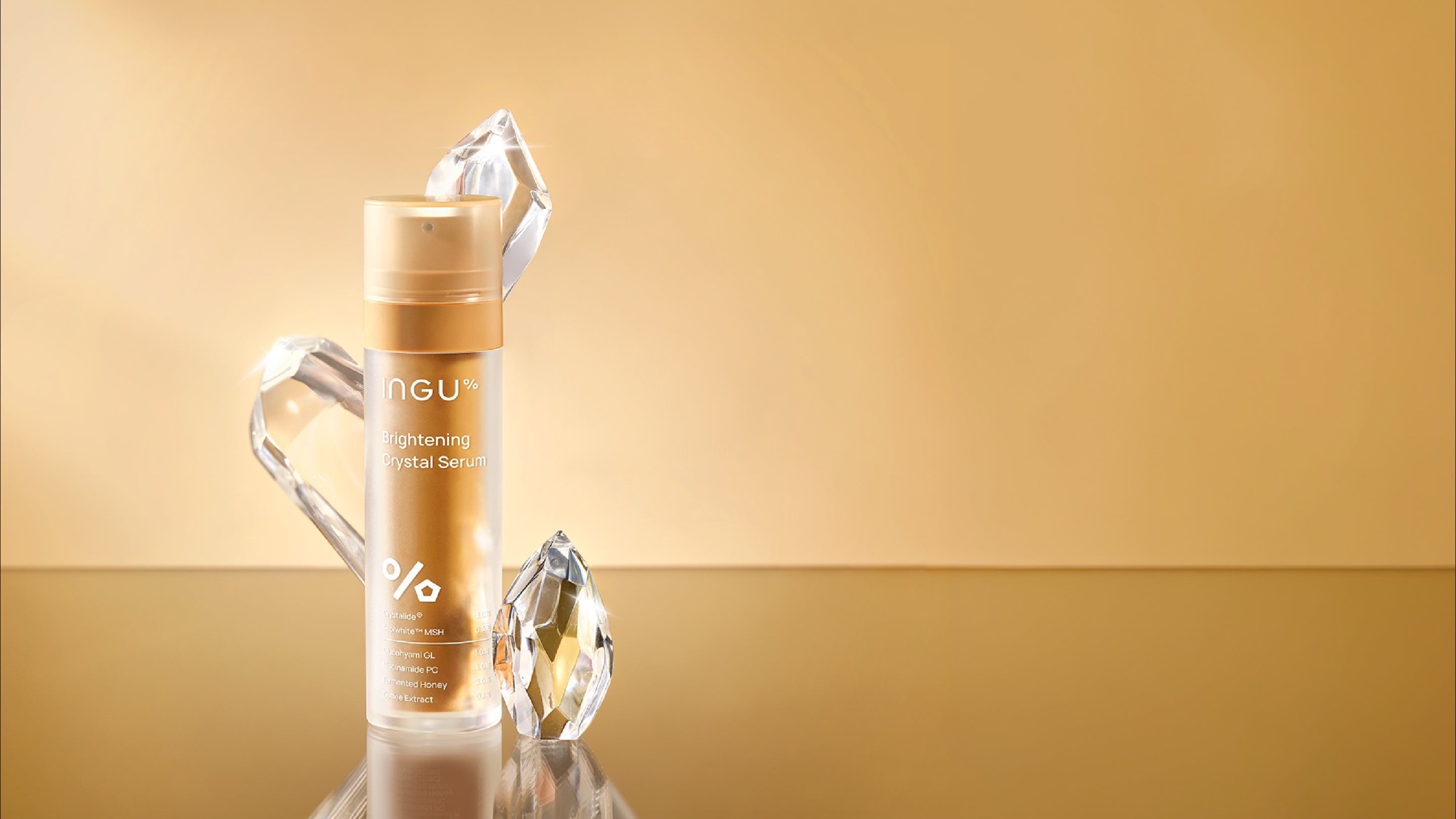
Chayadhorn "Ing" Kitiyadisai built his audience by asking people to turn a skincare box around and read the ingredients. Now the Thai creator is asking international shoppers to look past the familiar K-beauty and J-beauty labels and make room for T-beauty.
His company, Ingu Skin, began selling in Singapore in January and recently drew a sold-out meetup there with fashion brand Love, Bonito. The expansion follows a steep domestic climb. Reported revenue rose from 66.4 million baht in 2022 to 237.5 million in 2023, then reached 390 million baht, or about $12 million, in 2024, with 76 million baht in net profit.
Those numbers make Ingu more than a creator merchandise experiment. They also raise a useful question for Asian beauty: can a young Thai skincare label sell expertise, rather than low prices, as its reason to travel?
Ing taught shoppers before he sold to them
Ing grew up as the third generation of a cosmetics family. His grandfather founded an early Thai hair-pomade brand, and his father expanded the family business into contract cosmetics manufacturing. Weekend visits to the lab gave him an early view of how formulas come together, although he initially chose a different path.
He studied business administration at the University of Southern California, worked as a management consultant at a Big Four firm, and later took a cosmetic-formulation course at Kasetsart University in Bangkok. The practical reason was persistent acne. Products kept promising results without helping him understand why a formula might work for his skin.
That frustration became Flip the Box with Ingck, a Thai-language video format that broke ingredient lists and research into friendly explanations. Ing started posting during 2020, when skincare interest was surging and Thai beauty content tended to split between clinical lectures and visual before-and-after reviews. His first YouTube video went viral by pointing out the distance between a product's formula and its marketing.
The format created an unusually demanding customer base. Viewers learned to ask about active percentages, supporting ingredients, and whether a routine had become unnecessarily crowded. By the time Ing and his brother, Keerathat Kitiyadisai, launched Ingu in 2022, the founder had already spent years explaining the standards by which his own products would be judged.
Ingu's first 10,000 units reportedly sold out in 10 minutes. Within six months, sales reached 100 million baht.
The tropical-climate pitch is specific
Ingu organizes its range around short routines, skin-barrier support, and textures suited to heat and humidity. Its Super-Light Soothing Sunscreen combines seven UV filters with encapsulated centella asiatica and a prebiotic complex in a lightweight formula. The Brightening Crystal Serum discloses concentrations including 4 percent niacinamide, 3 percent Palmitoyl Tetrapeptide-10, and 2 percent fermented honey.
The percentages matter because transparency is part of the product, not a footnote. Ingu publishes complete ingredient lists and explains why each featured active is present. It also works with Thai-grown materials and local university research while using established cosmetic technology from abroad.
This gives the brand a more defensible T-beauty proposition than adding Thai botanicals to familiar packaging. Thailand's climate makes non-greasy sunscreen, sweat-friendly textures, and comfortable daily layering practical requirements. The same needs travel naturally to Singapore, Malaysia, and the Philippines.
Thailand already has the manufacturing capacity to support that argument. Its combined domestic and export cosmetics market is projected to approach 200 billion baht in 2026. Heritage company Srichand, mass labels such as 4U2, and a growing group of independent skincare brands have built a varied local market. Ingu occupies the science-led, founder-educator end of that spectrum.
Selling fewer steps is the useful tension
Ingu's sharpest brand idea is its opposition to "skincare overdose." Ing argues that many people create irritation by stacking too many products, and the company declined to launch sheet masks even though he believed the category could have accelerated growth.
There is an obvious tension in a skincare company warning shoppers against overconsumption. Ingu handles it by treating education as customer acquisition: diagnose the concern, simplify the routine, and recommend a targeted product only when it earns a place. That approach helps explain why Ing can review the wider market without making every piece of content feel like a sales pitch.
His combined following has grown beyond two million across YouTube, TikTok, Instagram, and Facebook. English-language videos, introduced in 2025, doubled his audience within a year and brought viewers from Southeast Asia, the United States, Britain, and Europe. International shoppers can already find selected Ingu products through YesStyle, while Singapore offers the brand its first meaningful test beyond Thailand.
Our read
Ing's real advantage is the order in which he built the business. He established a way of thinking, earned trust by applying it to other companies, and then made products that had to survive the same scrutiny.
The next challenge is separating the brand's authority from its founder. Ingu will need retail education, packaging, and product performance to communicate clearly when Ing is absent from the screen. It must also defend higher formula costs in a Southeast Asian market where local beauty is often expected to compete on price.
Still, Ingu arrives at the right moment. Global shoppers already understand the idea of Asian skincare systems, and tropical consumers have long been underserved by formulas designed around cooler climates. If T-beauty becomes a durable international category, Ingu has a credible chance to be one of the brands that explains why.