Inside Chinatown’s Tiny New Museum for Chinese Queer Life
OUT Museum, a bilingual one-room space at 949 Clay Street, bills itself as the world’s first Chinese queer museum. Founder Xiangqi Chen built it so Chinese LGBTQ+ artists from China and the diaspora can be seen in public, including work that cannot safely circulate at home.
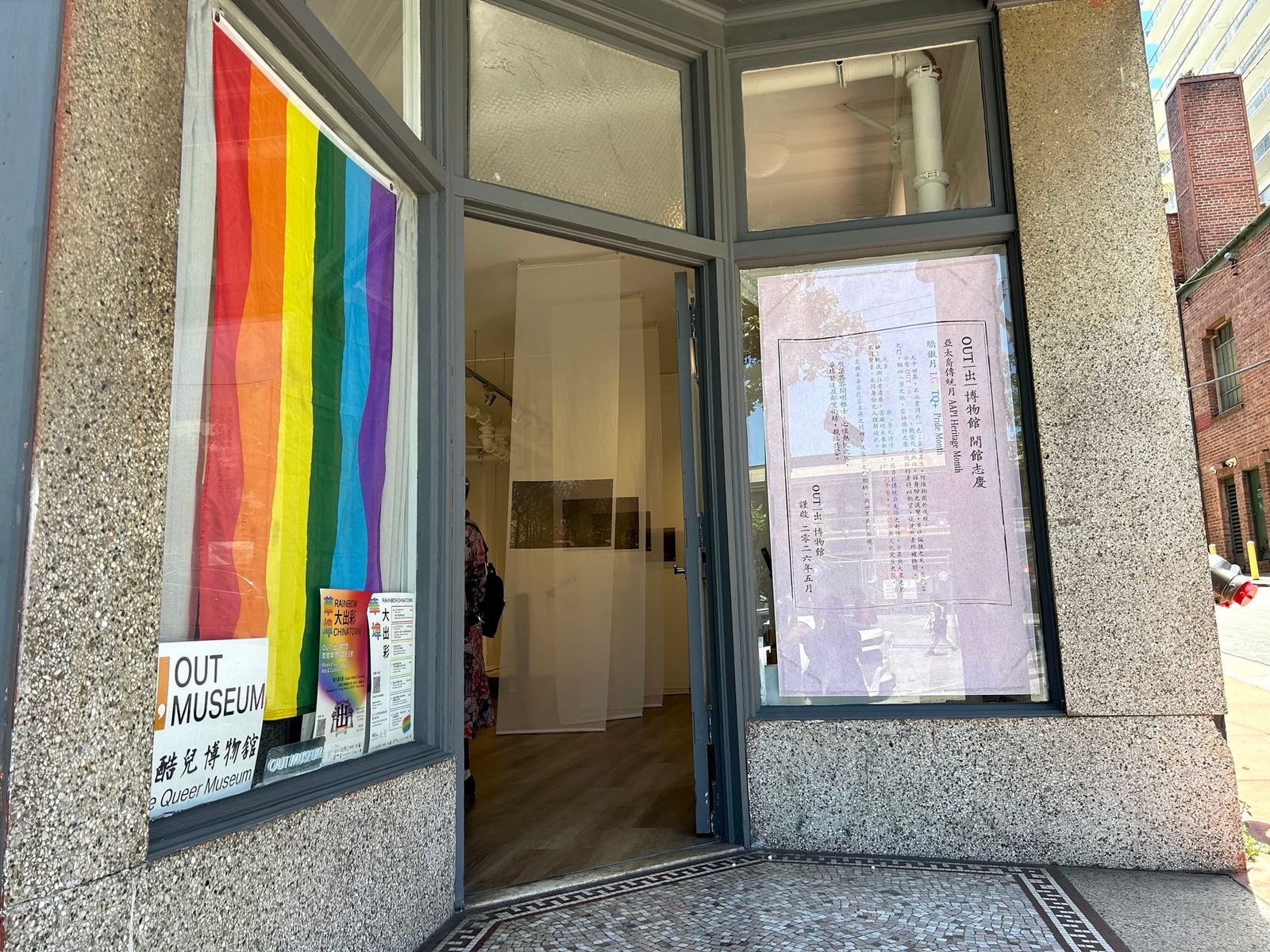
On Clay Street in San Francisco’s Chinatown, a rainbow flag hangs in a storefront window across from the Chinese Historical Society of America. The room inside is one gallery deep. The claim on the door is global.
OUT Museum, bilingual as OUT|出|博物馆, opened with a rainbow ribbon cutting at the end of May, between Asian American and Pacific Islander Heritage Month and Pride. Founder Xiangqi Chen, a lesbian artist and activist who left Shanghai after years of grassroots organizing, calls it the world’s first Chinese queer museum. Associated Press, Bay Area Reporter, and local outlets have covered the opening as a first-of-its-kind platform for Chinese LGBTQ+ artists from China and the diaspora.
Our take: the story is less square footage than jurisdiction. Who gets to define Chinatown, what Chinese culture is allowed to look like in public, and where creative work goes when its country of origin will not hold it.
Shanghai sketch, San Francisco storefront
Chen first visited Chinatown in 2012 as a Chinese Culture Center visiting artist. She returned more than a decade later with a different brief.
During COVID quarantine in Shanghai, she began fundraising for a Chinese LGBTQ+ history museum. More than 2,000 people backed a Kickstarter. She knew the building would likely never rise there. In 2022 she entered the U.S. on a J-1 as a visiting scholar at Georgetown. By 2024 she was showing at the Asian Art Museum, then in residence with the Chinese Culture Center, which executive director Jenny Leung has called an incubating space for the OUT Museum prototype. A three-month trial at 41 Ross tested the neighborhood. In May 2026 the Clay Street lease, multi-year and semipermanent, hosted the grand opening.
Helen Zia, the author and activist on the museum’s advisory board, first met Chen a decade earlier at the Shanghai lesbian center Chen ran. Zia has called that work brave and state-watched. Chen told AP that queer-identified art exhibitions could still exist in China around 2013 to 2015 if artists avoided naming themselves as LGBTQ. “But not nowadays.”
That context matters. Shanghai Pride shut down in 2020. WeChat wiped student LGBTQ accounts in 2021. Beijing LGBT Center closed in 2023 under “force majeure.” Homosexuality left China’s psychiatric disorder list in 2001, but marriage and adoption remain closed, and public advocacy stays tightly policed. OUT’s wall text can say what a Shanghai storefront cannot.
What the one room holds
The inaugural installation, titled The Ongoing: Mapping the Chinese LGBTQ Community (also framed as 未竟之势 / “unfinished momentum”), gathers work from five artists in photography, porcelain, altar installation, and interactive media. Hours start narrow: Saturdays, roughly 11:30 a.m. to 4:30 p.m., free with RSVP. Hope to expand days and exhibits is already part of the pitch.
Hong Kong artist Dixon Ngai contributed a porcelain wine pot painted with lyrics from the Cantonese opera Di Nü Hua (The Flower Princess). Multimedia partners Shi Tou and Mingming hung a chapter of their Rainbow Handstand photographic series. Chen built an altar inside a traditional wedding cabinet for Hu Tianbao, the Rabbit God associated with blessing love between men. Her Collective Notation asks visitors to trace gender and sexuality paths in yarn that will later become a guqin composition. Another station invites AI-assisted zine-making from personal stories.
The bilingualism is not branding garnish. Chen told COYOTE that academic English LGBTQ vocabulary can bounce off Chinatown elders, while Chinese phrases for same-sex love land closer to daily speech. Labels in both languages are how the museum talks to aunties after grocery runs and to diaspora artists arriving from Instagram DMs.
Chinatown receives the news
Chen worried elders would keep walking. Reception has been warmer and stranger than a culture-war script.
AP heard from a 60-year-old transgender man who immigrated in the 1970s for gender-affirming care unavailable at home, and from a mother seeking language to meet her gay adult son. COYOTE and San Francisco Public Press tracked shopkeepers who printed opening posters, then showed up; Crystal Jang, 80, and her wife Sydney Yeong, who marched in Chinatown’s first LGBTQ Lunar New Year contingent in 1996 with masks for fear of family recognition; Abby Chen of the Asian Art Museum calling it built for us, by us, for everyone who comes after. Lily Lo of BeChinatown noted the storefront had sat vacant for years.
Zia recalls 2008 flyer work in Oakland Chinatown meeting yells and spit. The same neighborhood complex that once mobilized against same-sex marriage can also host a queer museum across from a Chinese history institution. Attitudes moved. The archive still has to prove it can last.
Our verdict
Large museums can tour queer Chinese art as a temporary season. OUT’s bet is permanence in a room neighbors already pass: multi-year lease, Saturday ritual, bilingual wall text, and a collecting impulse that now includes Chinatown’s own unarchived LGBTQ stories alongside mainland and Hong Kong work.
Our read: size is the point. A tiny bilingual museum can hold a public Chinese queer archive because diaspora Chinatown still has storefront politics larger institutions treat as too local, too risky, or too specific. Whether OUT becomes a lasting archive depends on the ordinary things museums rarely romanticize: rent, Saturday staffing, trust from elders, and artists who keep sending work that cannot hang at home. Chen has said the opening is a start, not an ending. Chinatown already answered the harder question by letting the door stay open.