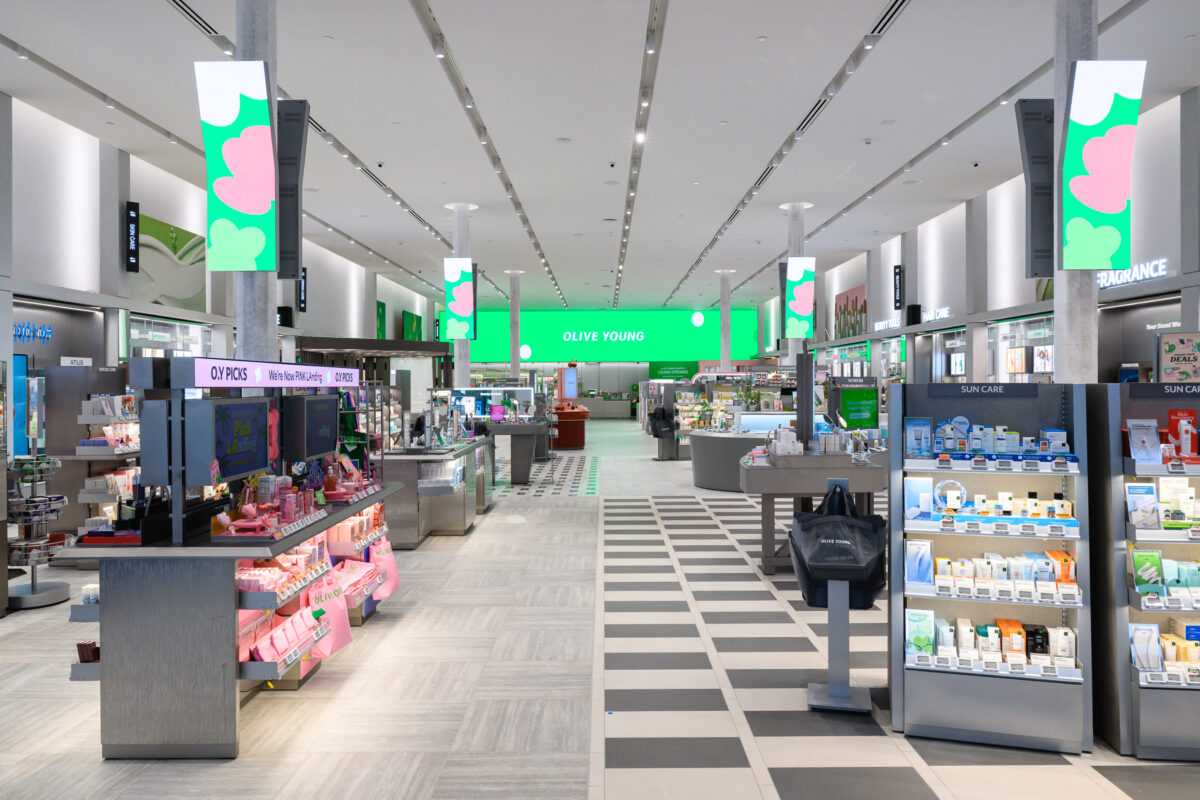
WELLAGE lands at Sephora because Olive Young already ran the test
Hugel's WELLAGE put five Real Hyaluronic products into Sephora's Olive Young K-Beauty Edit on August 20. The brand is the case study. Olive Young is the export desk that found, scored, and moved it.
 Anika Rao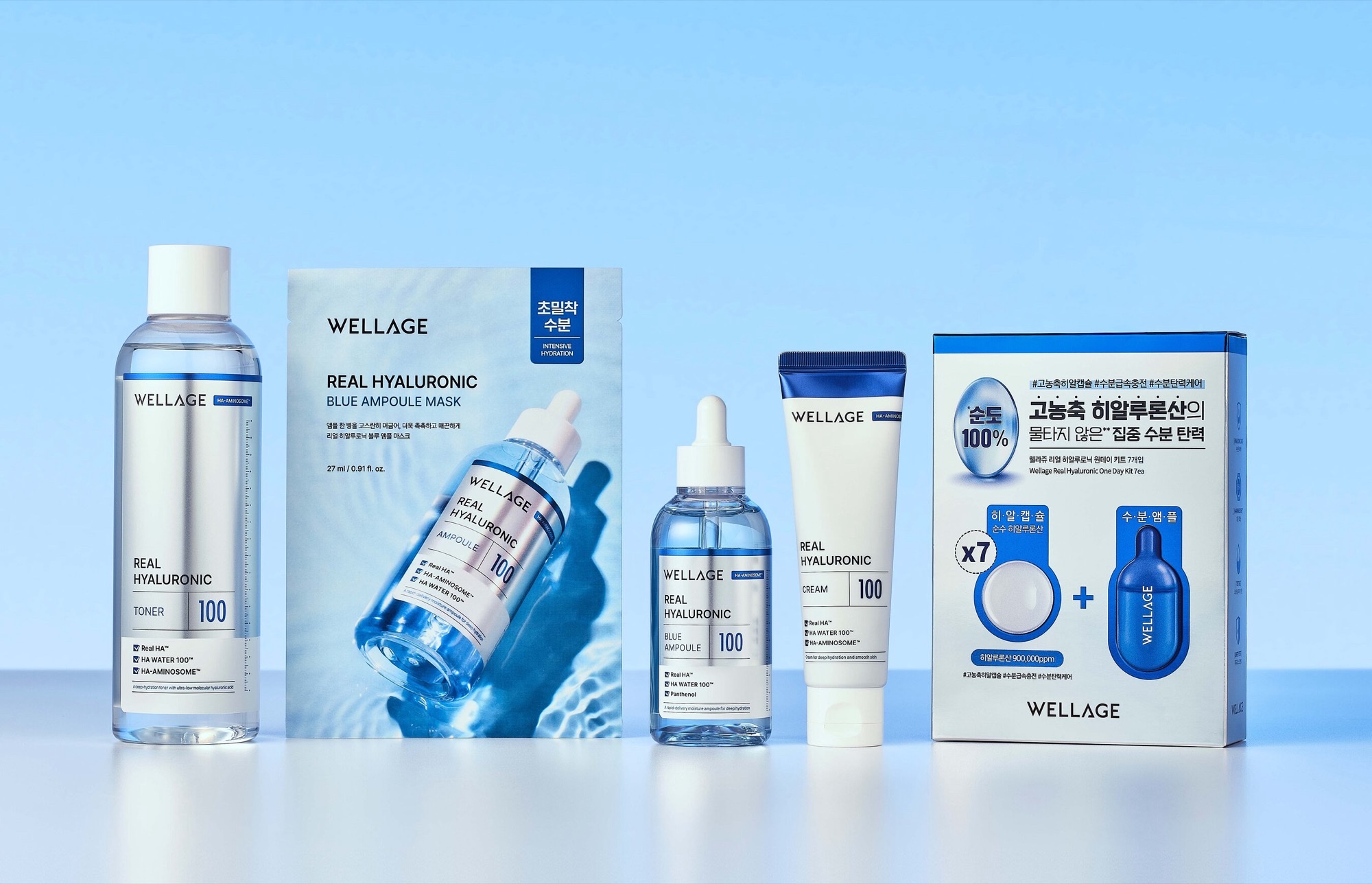
WELLAGE did not crash into Sephora as a surprise TikTok brand. It arrived on August 20 inside the Olive Young K-Beauty Edit, five Real Hyaluronic SKUs deep, with Olive Young having already graded the homework in Seoul and again in California.
The ampoule, toner, cream, mask, and One Day Kit go into the Edit that Sephora is running in more than 500 doors and on Sephora.com, with the shelf narrowing in smaller stores. Pop-up trucks outside Sephora locations in New York, Texas, and Florida are handing out 10ml miniatures of the Real Hyaluronic Blue 100 Ampoule, flagged in Hugel's release as the Essence/Serum winner at the 2025 Olive Young Awards.
Our read: the product is Korean clinic energy in a blue bottle. The infrastructure is Olive Young.
Hugel built a derma brand before America cared
WELLAGE is the dermacosmetics arm of Hugel, the publicly traded Korean medical-aesthetics company behind botulinum toxin, hyaluronic acid fillers, and skinboosters. The parent already sells injectables into about 70 countries. WELLAGE is the at-home lane: high-purity actives, clinical-derma language, and a Real Hyaluronic franchise built around multi-weight hydration rather than fragrance theater.
In Korea, that positioning stuck. WELLAGE has been named the country's top derma-cosmetic brand for seven straight years at the Brand of the Year Awards, and Hugel markets it as a leader in the hydration-ampoule aisle. Carrie Strom, the former Allergan Aesthetics president who became Hugel's global CEO in late 2025, is now pointing that same science story at North American prestige retail.
The America pitch keeps the clinic language Korea already bought. The Real Hyaluronic line arrives as shoppers know it, edited down to five hero SKUs Sephora can stock and explain.
Olive Young's ladder, in public
Watch the sequence and the export desk becomes obvious.
First Olive Young sells and ranks the brand in Korea. The Blue 100 Ampoule clears an awards stage that Korean shoppers actually track. Then Olive Young opens U.S. flagships in Pasadena and Century City in May and June, and WELLAGE lands on those shelves with a wider nine-product set spanning Real Hyaluronic, Cica Calming, and PDRN. Amazon and Costco already give the brand mass reach. Sephora is the prestige translation layer.
Olive Young has said the quiet part out loud. Doyoung Kim, its executive vice president of U.S. merchandising, has described the California stores as the place to experience K-beauty deeply and Sephora as the channel that spreads a curated shortlist fast. Kwon Ga-eun, who runs Olive Young USA, puts it more plainly: a proven retail platform with a U.S. foothold gives individual brands a steadier springboard than they could build alone.
WELLAGE is what that speech looks like in bottles. Seoul proof, California dress rehearsal, national Sephora rollout under Olive Young's name.
What "for America" actually changed
The Real Hyaluronic story crossing the Pacific is mostly packaging, placement, and proof. Hugel is not selling a secret U.S.-only formula swap.
Hugel is leading with the Olive Young Awards ampoule, sampling it from the truck, and keeping the clinical hydration pitch that already worked in Korea. Sephora gets a five-SKU Real Hyaluronic edit, tighter than the nine-product spread in Olive Young's own U.S. stores, which is how national retail usually digests K-beauty: shrink the wall, keep the hero, teach one routine.
Compare that to the old route, where a brand hired a U.S. distributor, chased a Sephora buyer meeting, and hoped TikTok closed the gap. Olive Young is doing the buyer work in reverse. It identifies domestic winners, validates them with Korean sell-through and awards, then places them on a shelf that carries its own name inside Sephora's network.
We covered the wider 19-brand edit earlier this month. WELLAGE is the clearest receipt inside it: a medical-aesthetics parent, a Seoul ranking, two L.A. Olive Young openings, then the Edit.
The soft-power shelf
If this pipeline holds, Olive Young becomes something rarer than another K-beauty storefront. It becomes the unofficial export office that decides which Korean formulas get a national American try-on before the category moves on.
That matters for shoppers who are tired of gray-market bottles and for brands that cannot afford a five-year prestige hunt. It also concentrates power. Nineteen names made the first edit. Hundreds of Olive Young bestsellers did not.
Our take: read WELLAGE's Sephora day as a systems demo with a brand attached. Hugel supplied the clinic DNA. Olive Young supplied the scoreboard and the door. Sephora supplied the mall. Watch whether the next wave of Korean dermacosmetics climbs the same rungs, because the ladder is now the story.